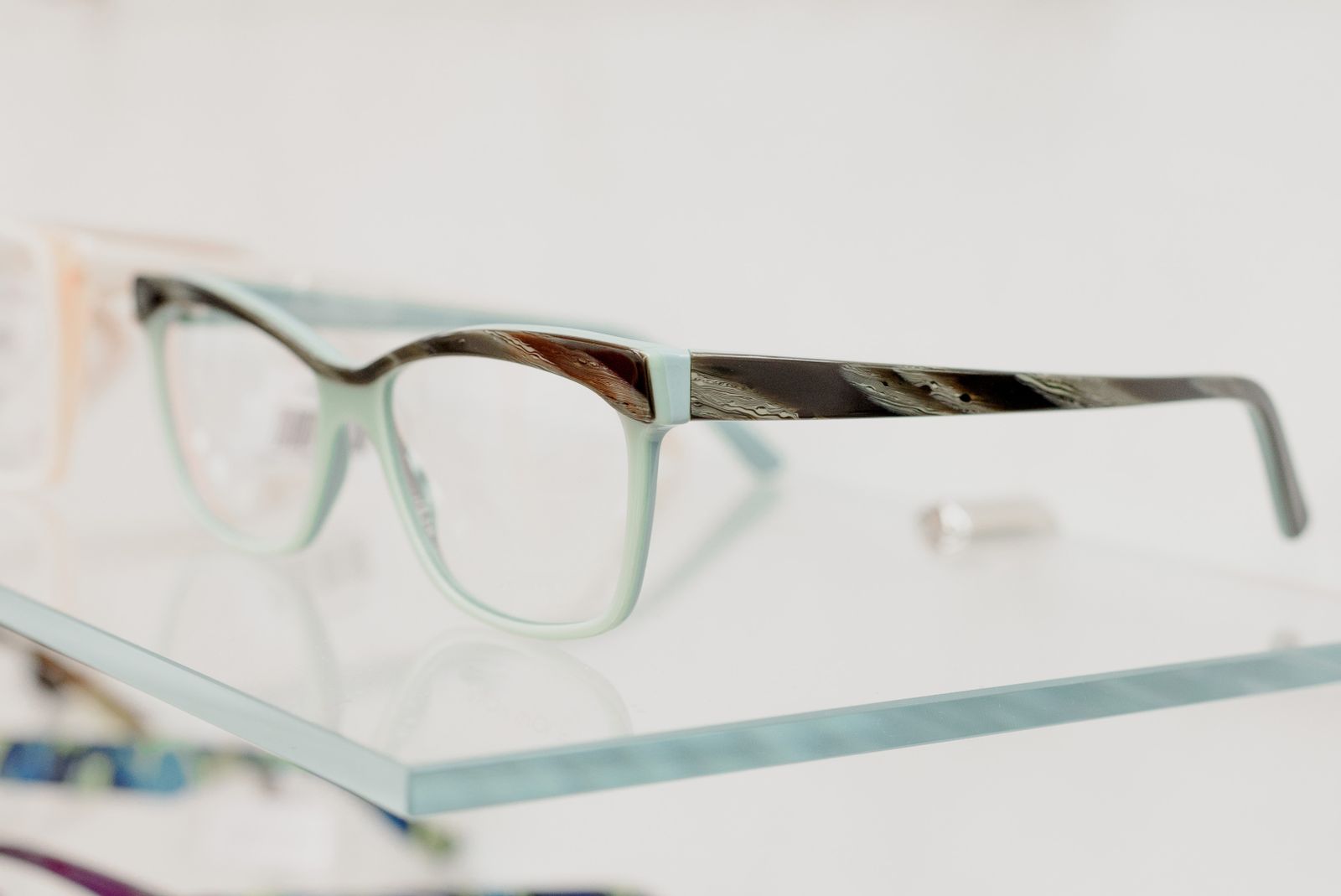
A new pair of glasses is something you wear every day, so it is worth taking your time. The right frame looks like you, sits comfortably and works well with your lenses.
Start with fit, not fashion
- The bridge should rest on your nose without pinching or sliding down
- The frame should be about as wide as your face, without gaps at the sides or pressure on your temples
- Your eyes should sit near the centre of each lens
- The arms should reach your ears and curve gently behind them
- The frame should feel light enough to forget about after a few minutes
Think about your lenses
Your prescription affects which frames work best. Stronger prescriptions often look and feel better in smaller frames, and thinner lens materials can reduce weight and thickness. If you need varifocals, the frame needs enough depth for the reading part of the lens. Ask your optician which frames suit your prescription before you fall in love with one.
Shape and colour
A common rule of thumb is to choose a frame shape that contrasts with your face: softer, rounder frames for angular faces and more defined frames for rounder faces. Treat this as a starting point, not a rule. Colour matters just as much: frames that pick up your eye, hair or skin tones tend to look natural, while bold colours make a statement.
Match your everyday life
Think about what you do most. Sturdy, flexible frames suit sports and busy days, lightweight frames suit long hours at a screen, and many people like a second pair of prescription sunglasses for driving and holidays.
Try on, then ask
Try several styles, including ones you would not normally pick, and take a photo of each so you can compare them. A dispensing optician can check the fit, explain your lens options and adjust the frame so it sits just right.
Frame and lens choices depend on your prescription and needs. Ask your optician for advice that fits you.