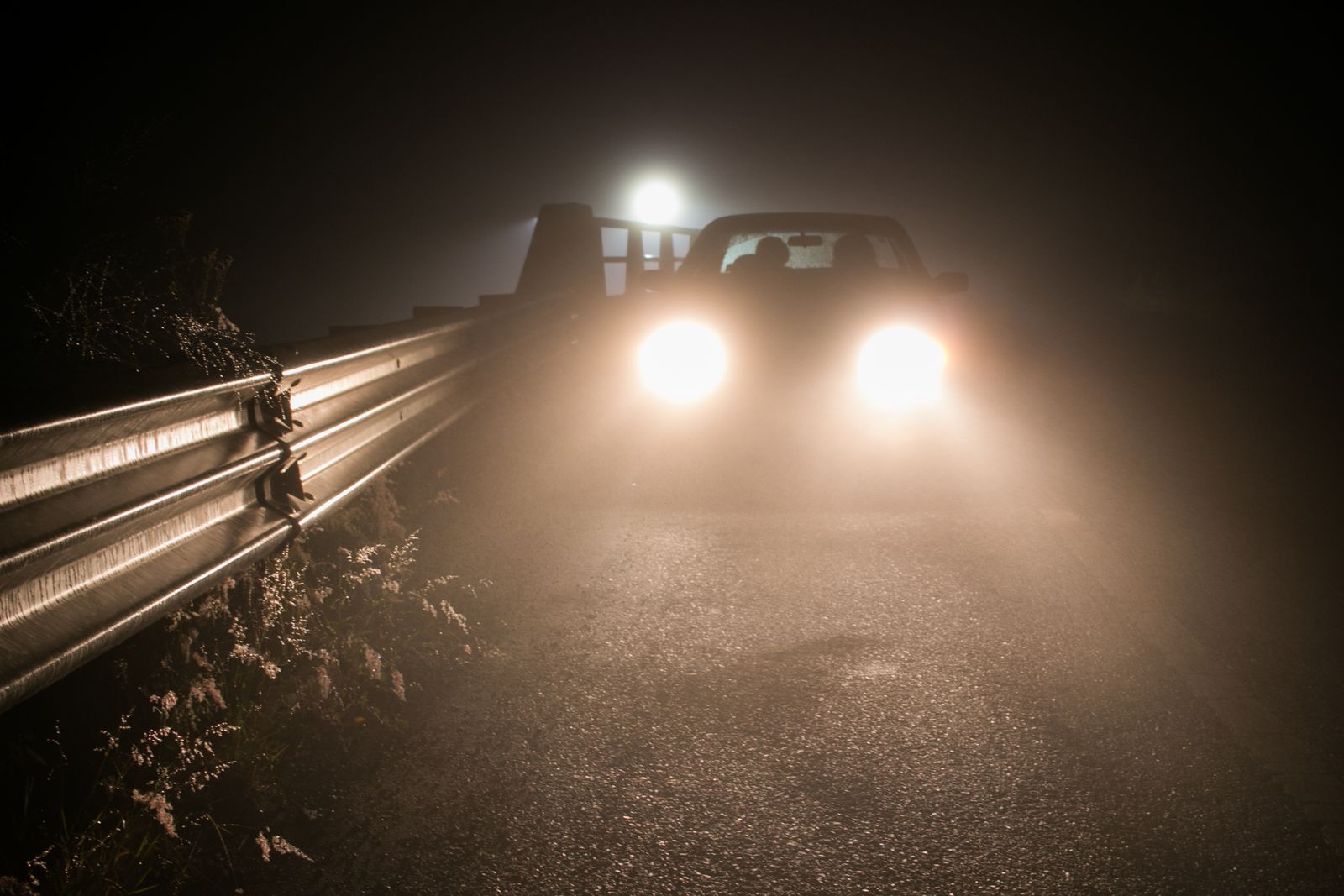
Breaking down after dark is more stressful than in daylight, and it is riskier: other drivers see you later, and it is harder to judge where it is safe to wait. A few simple habits make a big difference while help is on its way.
Get off the road and switch on your lights
If the car still moves, pull as far off the road as you can, onto a hard shoulder, a lay-by or a side street. Switch on your hazard lights straight away and keep your sidelights on so the outline of the car stays visible.
Decide where to wait
- If it is safe to get out, leave on the side away from traffic and wait behind a barrier or well back from the road.
- Never stand between your car and passing traffic, and never try to repair the car on a busy road.
- If you cannot get out safely, stay inside with your seatbelt on and call the emergency services.
Make yourself easy to see
- Wear something bright or reflective if you have it; a high-visibility vest in the glovebox is cheap and worth carrying.
- Put out a warning triangle only where it is safe and the local road rules allow it, well behind the car.
- Use your phone torch to signal to the tow truck when it arrives, not to wave at traffic.
Tell dispatch exactly where you are
Give the road name, direction of travel and the nearest exit, junction or landmark. Many phones can share your location by message. Keep your phone charged and switched on so the driver can call you when they are close.
This is general guidance only. Always follow local road rules and any instructions from the police or highway staff, and call the emergency services first if anyone is hurt or the vehicle is a danger to traffic.