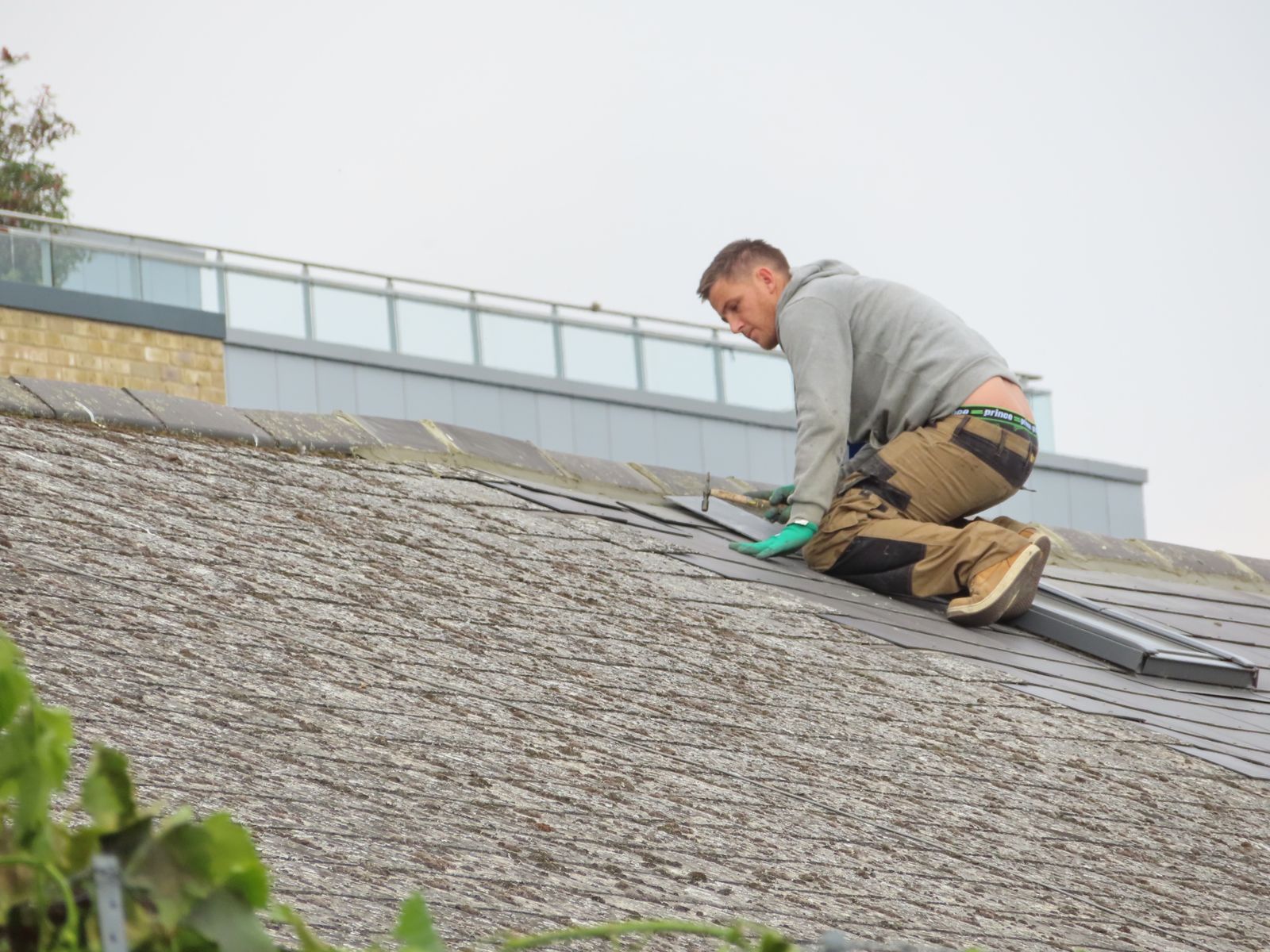
Roofs rarely fail all at once. Small problems such as a lifted shingle or a cracked seal around a vent let water in slowly, and by the time you see a stain on the ceiling the damage underneath may have been building for months. A quick look twice a year, and after every big storm, helps you catch problems early.
What to look for from the ground
- Missing, cracked or curling shingles, or tiles that have slipped out of line.
- Granules in the gutters: asphalt shingles shed their gritty coating as they wear out.
- Damaged flashing around the chimney, skylights, vents and where the roof meets a wall.
- A sagging ridge or roof line, which can point to a problem with the deck or the frame.
- Moss or algae that holds moisture against the roof surface.
What to look for inside
- Water stains or damp patches on ceilings and upper walls.
- Daylight showing through the roof boards in the attic.
- Damp or moldy insulation, or a musty smell in the attic after rain.
- Peeling paint near the eaves.
Stay safe
Use binoculars from the ground or look from a window instead of climbing onto the roof. Wet, steep or mossy roofs are slippery, and walking on them can also break shingles and tiles.
If you spot any of these signs, book an inspection. A roofer can tell you whether a small repair is enough or whether the roof is near the end of its life, and show you photos of what they found.