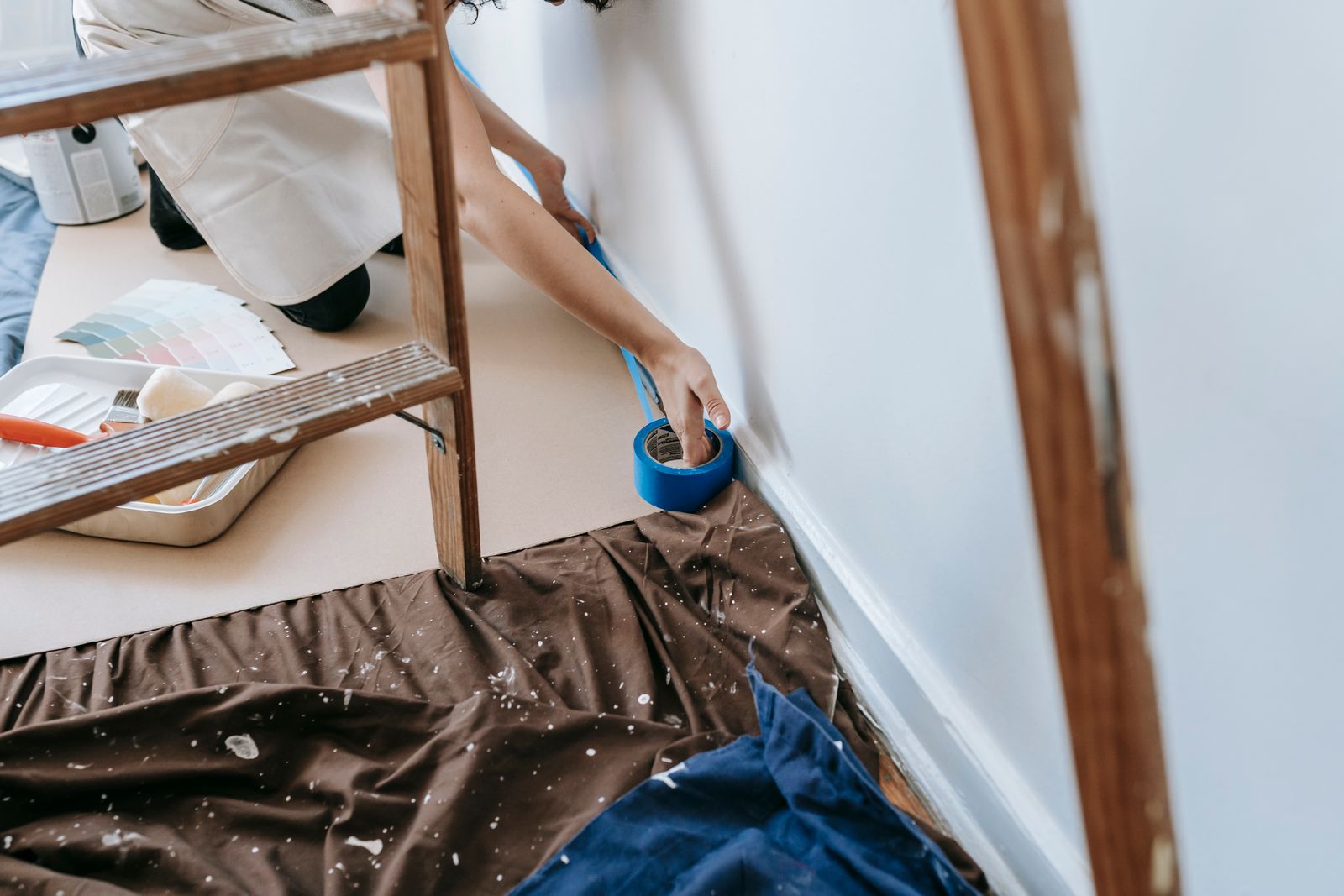
Most of the time on a good paint job goes into preparation. It is not the exciting part, but it is what makes the finish look smooth, keeps edges crisp and helps the paint stay on the wall for years.
1. Clear and protect the room
- Move small items, ornaments and pictures out of the room.
- Move larger furniture to the middle and cover it with dust sheets.
- Cover the floor with drop cloths, and tape them down at the edges so nobody trips.
- Take off switch plates and socket covers if it is safe to do so, or mask them carefully.
2. Repair the surfaces
- Fill cracks, nail holes and dents with a suitable filler, and let it dry fully.
- Sand the filled areas flush, then lightly sand glossy surfaces so the new paint can grip.
- Scrape away any flaking or peeling paint and feather the edges with sandpaper.
3. Clean
Dust and grease stop paint from sticking. Wipe walls with a damp cloth, and clean kitchen walls and woodwork with a mild degreaser. Let everything dry before you continue.
4. Prime where it is needed
Bare plaster, new filler, bare wood and stains such as water marks usually need a primer or a stain-blocking undercoat. Check the paint tin for what the manufacturer recommends for your surface.
5. Mask the edges
Use a good-quality painter’s tape along skirting boards, frames and ceilings if you are not confident cutting in by hand. Press the edge down firmly and remove the tape while the last coat is still slightly soft for the cleanest line.
Ventilate the room while you work, keep children and pets away from wet paint and fillers, and always follow the safety advice on each product.