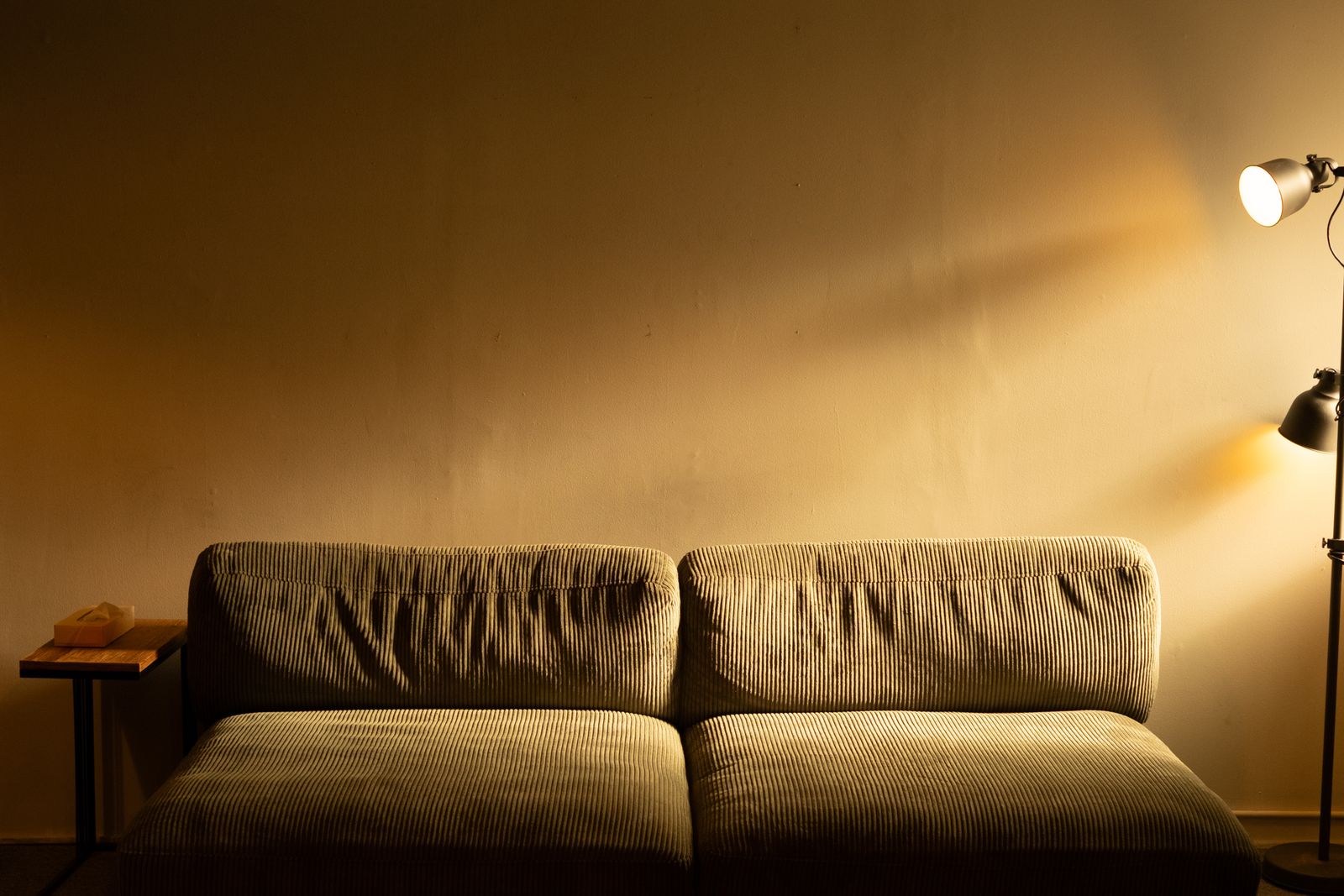
Lighting changes how a room feels more than almost anything else. Most living rooms are lit by a single ceiling light, which makes them flat in the evening. The fix is to plan light in three layers.
Ambient light
This is the general light that lets you move around safely: a ceiling pendant, wall lights or recessed lights. Put it on a dimmer so you can turn it down in the evening.
Task light
Light for the things you do: a reading lamp beside a favourite chair, a lamp on a desk, or a light over a games table. Place it so the light falls on the page or the work, not in your eyes.
Accent light
Small, softer lights that add depth: a table lamp on a sideboard, a picture light over art, or lights inside a bookcase. They create pools of light that make a room feel welcoming.
Simple rules that help
- Aim for light at different heights: ceiling, eye level and low down.
- Use warm white bulbs (around 2700–3000 K) for living spaces.
- Try for at least three or four light sources in a typical living room.
- Put lamps on smart plugs or a switched circuit so they turn on together.
Lighting is easiest to plan before any electrical work starts, so mention it at your first design consultation.