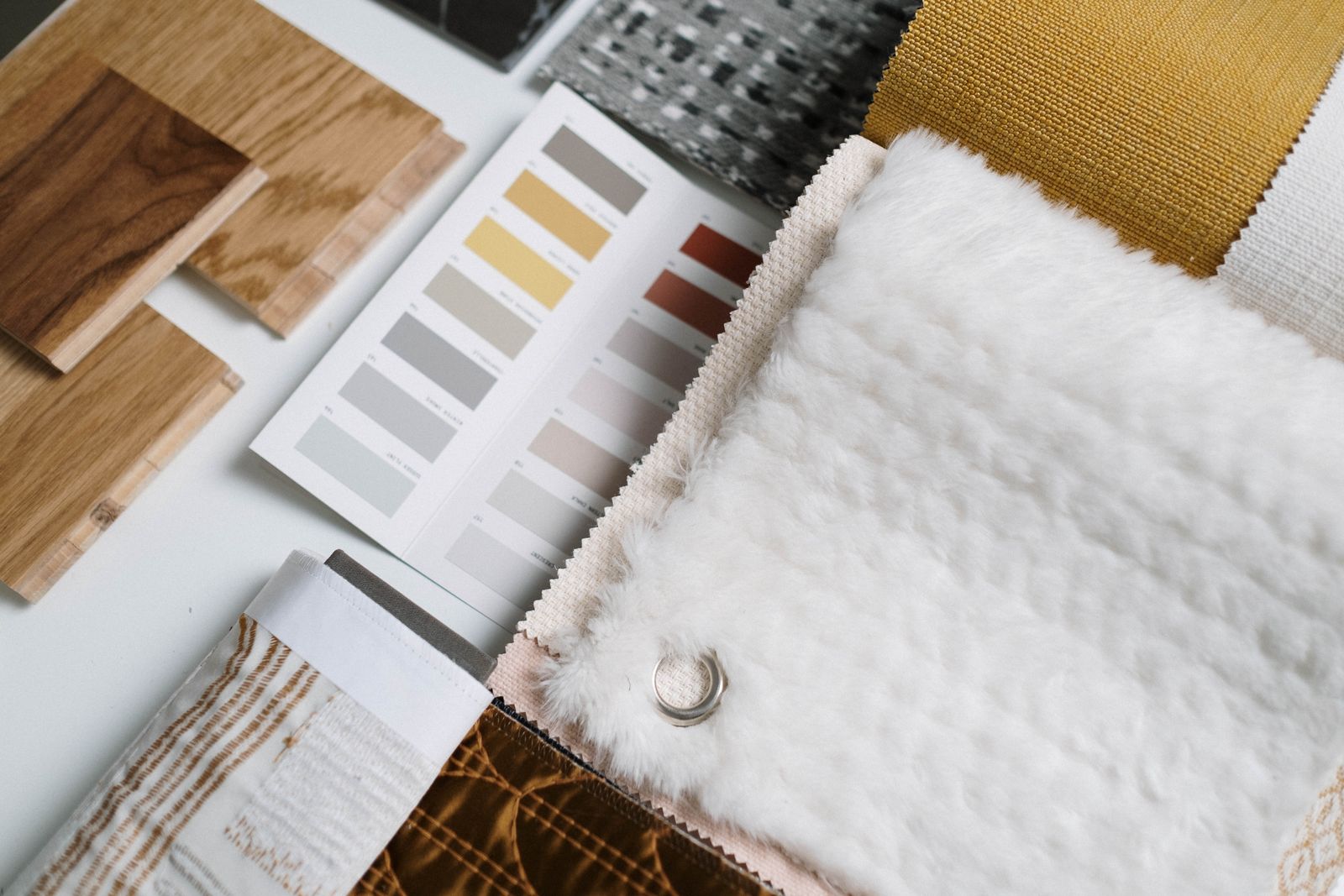
A good colour palette makes a home feel calm and connected, even when every room has its own character. You do not need a colour wheel to get there, just a few simple steps.
1. Start with something you already love
Pick one thing you will keep for years: a rug, a painting, a sofa or the view from the window. Pull two or three colours from it. They become the starting point for the whole palette.
2. Use the 60-30-10 balance
A classic guide is to let one colour cover about 60% of a room (usually the walls), a second about 30% (larger furniture, curtains, a rug) and an accent about 10% (cushions, art, a lamp). It is a starting point, not a rule, but it stops a room feeling busy.
3. Check the undertones
Whites, greys and beiges all lean warm (yellow, pink, red) or cool (blue, green). Hold paint cards against a sheet of plain white paper to see the undertone, and keep the undertones of your main colours in the same family.
4. Test in your own light
- Paint large samples (or use sample sheets) on two or three walls of the room.
- Look at them in the morning, in the afternoon and with the lamps on in the evening.
- In the northern hemisphere, north-facing rooms get cooler, softer light; south-facing rooms get warmer, brighter light.
- Live with the samples for a few days before you decide.
5. Link the rooms together
Choose a few colours that repeat through the home, for example the same white on every ceiling and woodwork, or one accent that appears in each room in a different amount. This makes the house feel considered as you walk through it.
Not sure where to start? A colour consultation in your own home is the quickest way to narrow down the options.