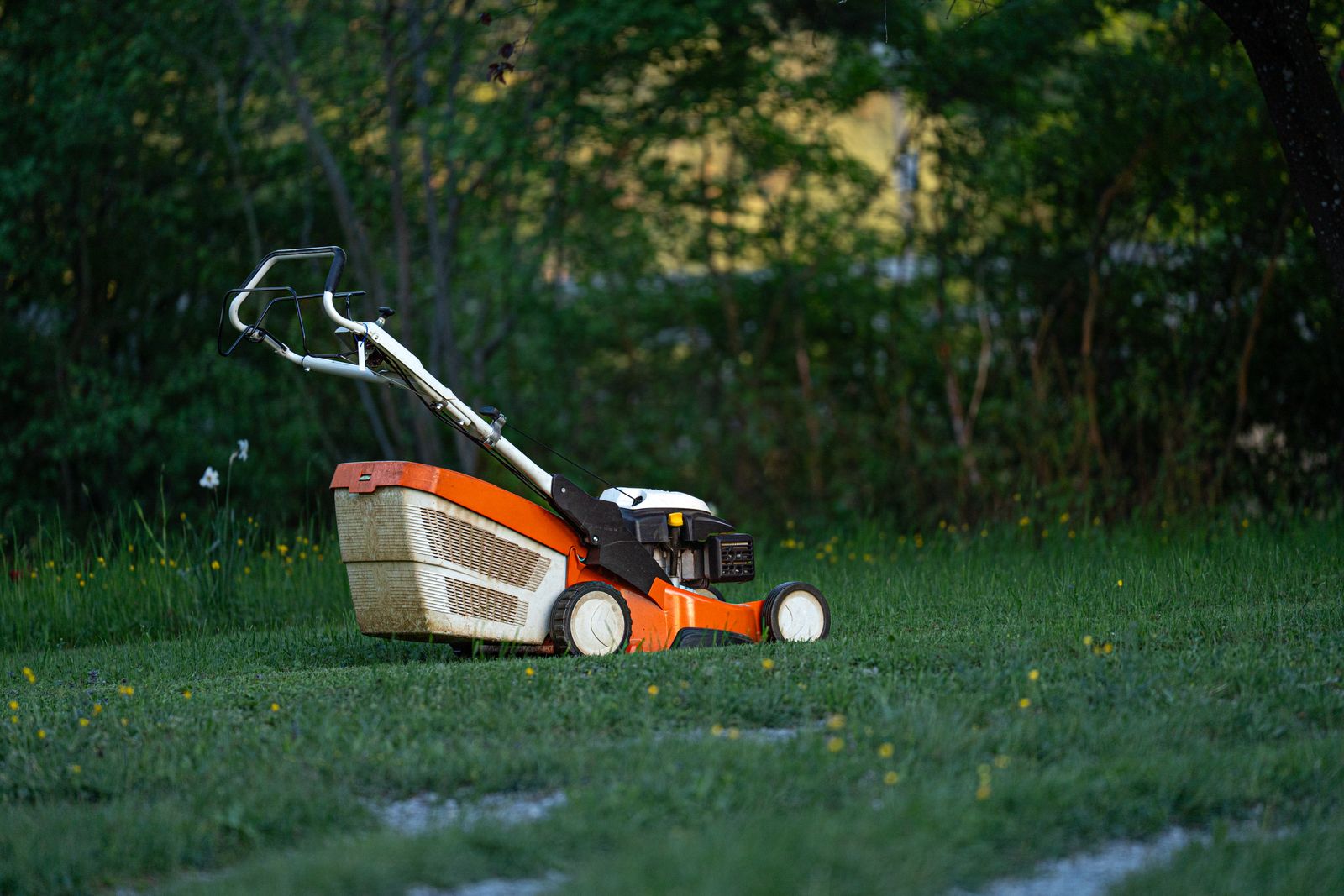
After a long winter most lawns look a little tired: flattened patches, leaves in the corners and a few bare spots. The good news is that a handful of jobs in early spring makes a big difference for the rest of the year. Wait until the ground has dried out enough that you do not leave footprints, then work through this list.
1. Clear and rake
- Pick up fallen branches, leaves and anything left out over winter.
- Rake lightly to lift flattened grass and pull out dead material (thatch).
- Look for patches where water sits after rain: they may need aeration later.
2. Get the mower ready
- Sharpen or replace the blade. A blunt blade tears the grass and leaves brown tips.
- Check the oil, air filter and spark plug, or have the mower serviced.
- Clean old clippings off the deck so it cuts and collects properly.
3. The first cut
Start with the mower on a high setting and only take off the top of the grass. A good rule is to never remove more than a third of the blade height in one cut. Lower the height gradually over the next few weeks.
4. Feed, seed and edge
- Fill thin or bare spots with grass seed suited to your area, and keep them moist until they sprout.
- Apply a spring lawn feed if your lawn needs it, following the instructions on the pack.
- Cut a clean edge along beds and paths: it makes the whole yard look tidier straight away.
When to ask for help
If moss, large bare areas or heavy, compacted soil are a problem every year, it is worth asking a lawn care professional to look at the cause. Aeration and overseeding in the right season often help more than extra feed.