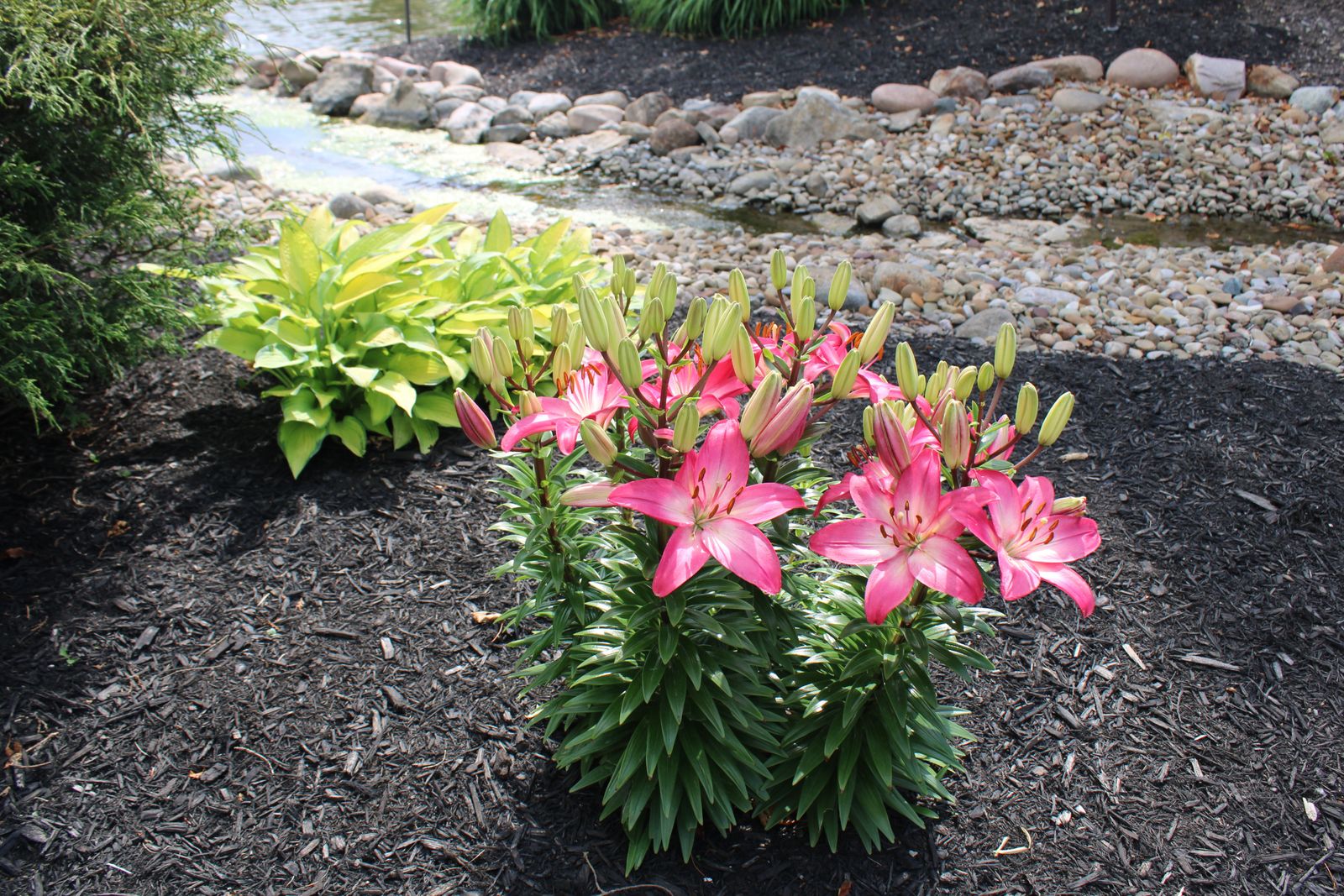
A fresh layer of mulch is one of the quickest ways to make garden beds look cared for. It also helps the soil hold moisture, keeps roots cooler in summer and slows down weeds. Here is how to do it well.
Choose the right mulch
- Shredded bark or wood chips suit shrub and tree beds and break down slowly.
- Compost or leaf mold feeds the soil and suits flower and vegetable beds.
- Gravel or stone suits dry gardens and paths, but does not improve the soil.
Prepare the bed first
- Pull weeds, roots and all, before you spread anything.
- Water the bed well if the soil is dry: mulch keeps moisture in, but it can also keep rain out of dry soil at first.
- Cut a clean edge so the mulch stays in the bed and off the lawn.
How thick should it be?
A layer of about 2 to 3 inches (5 to 8 cm) is enough for most beds. Thinner layers do little against weeds; much thicker layers can stop air and water reaching the roots.
Keep it away from stems and trunks
Leave a small gap around plant stems and tree trunks. Mulch piled against the bark (sometimes called a mulch volcano) keeps it wet and can lead to rot and pests. A flat ring around the tree, a hand’s width from the trunk, is all you need.
When to top it up
Most organic mulches need topping up once a year, usually in spring once the soil has warmed up. Rake the old layer first, then add just enough to get back to the right depth.