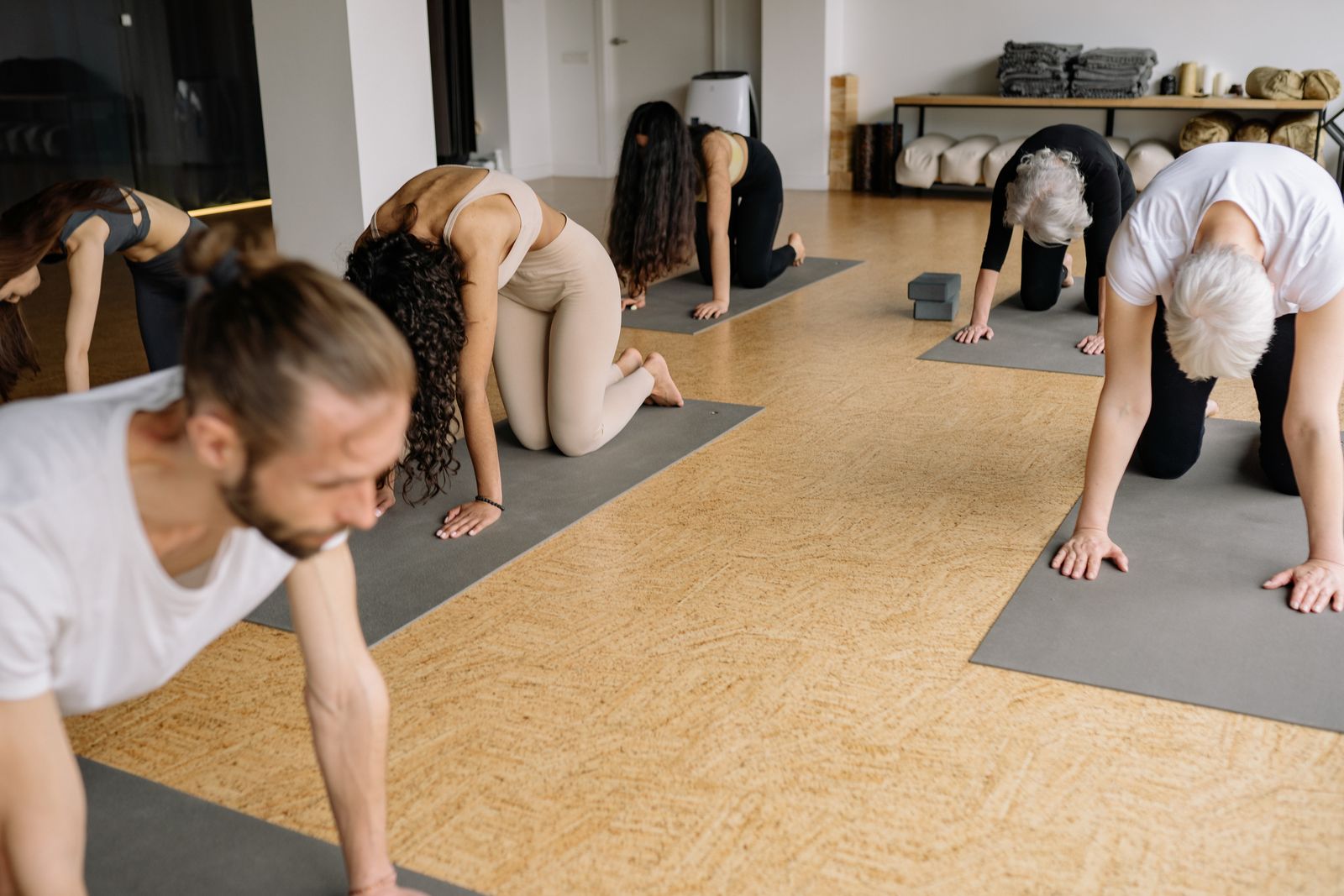
Yin and vinyasa are two of the most popular class styles on a yoga timetable, and they could hardly be more different. Knowing what happens in each helps you choose the right class for the day you are having.
What happens in a vinyasa class
Vinyasa links movement to the breath. You flow from one pose to the next, often through sequences such as sun salutations, so the class feels active and continuous. Music is common, and the pace and difficulty vary a lot between teachers and levels.
- Feels like: moving, warming, rhythmic.
- Good if you: enjoy movement, like a bit of challenge or find it hard to sit still.
- Tip: try a beginners or slow flow class first, so you can learn the shapes before the pace picks up.
What happens in a yin class
Yin is slow and mostly on the floor. You hold a small number of seated or lying poses for several minutes each, with bolsters, blocks and blankets for support. The room is usually quiet, sometimes candlelit.
- Feels like: still, spacious, sometimes surprisingly intense in a quiet way.
- Good if you: want to slow down, prefer a calm room or have a busy, active week.
- Tip: long holds should feel like a gentle stretch, never pain. Use props freely and come out of a pose whenever you need to.
How to choose
Many people enjoy both: vinyasa when they want to move, yin when they want to unwind. If you are completely new, a beginners or hatha class teaches the basic poses at an easy pace and makes either style easier to join later.
Whatever you choose, tell the teacher about any injury or health condition before class, and check with your doctor if you are unsure whether yoga is right for you.