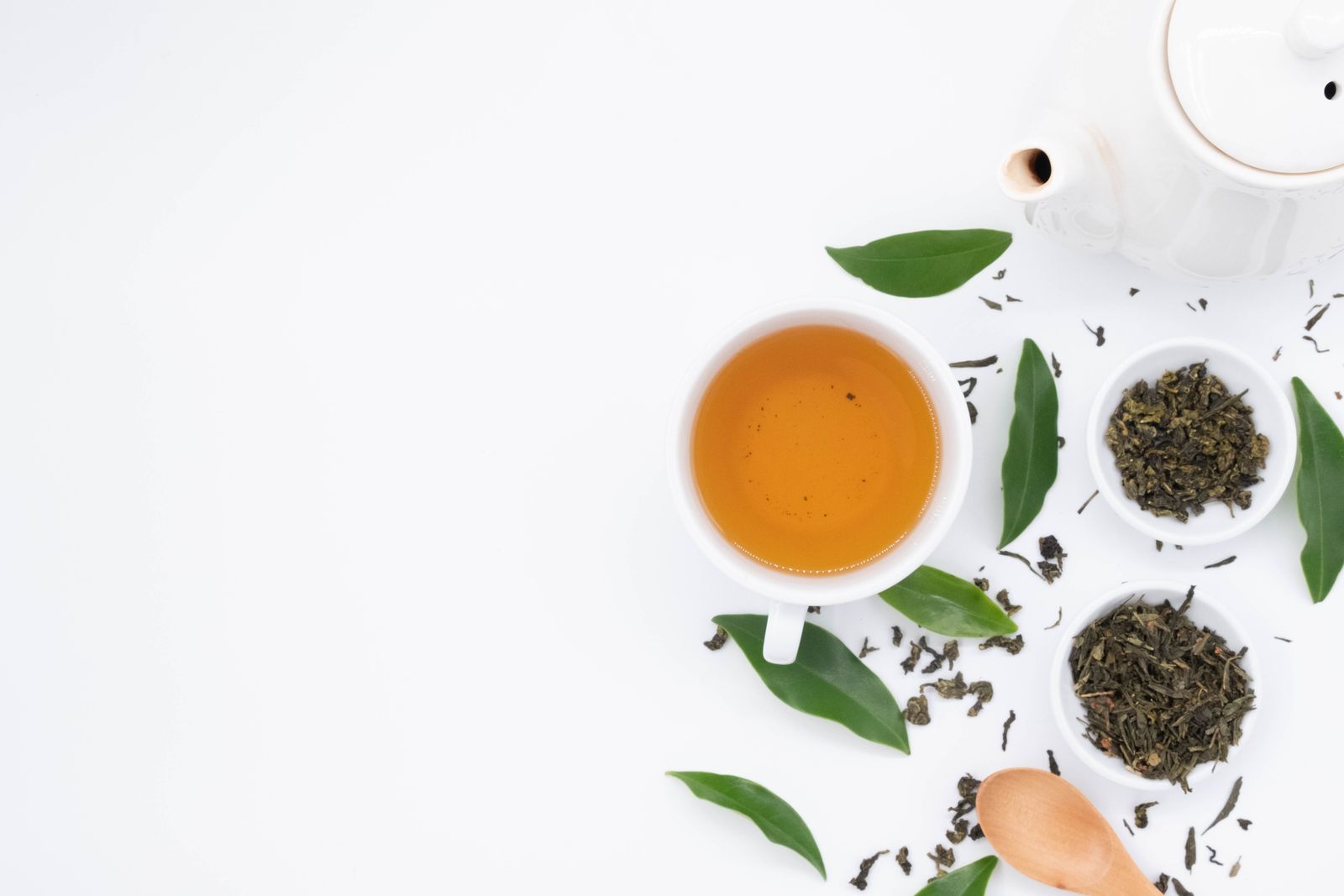
Black, green, white and oolong teas all come from the same plant, Camellia sinensis. What makes them taste so different is what happens to the leaves after picking.
Oxidation in a sentence
Once tea leaves are picked and bruised, they start to darken in the air, a little like a cut apple. Tea makers control how far this goes, and that is the main difference between the types.
- Green tea is heated soon after picking to stop oxidation, so it stays green and tastes fresh, grassy or toasty.
- White tea is handled very little: the leaves and buds are mostly just withered and dried, for a light, delicate cup.
- Oolong is partly oxidised, so it sits between green and black: floral and creamy at one end, roasted and rich at the other.
- Black tea is fully oxidised, which gives it a deeper colour and a stronger, malty or fruity taste that takes milk well.
What about herbal tea?
Peppermint, chamomile, rooibos and fruit blends are not made from the tea plant, so they are usually called infusions or tisanes. Most are naturally caffeine-free.
Where to start
If you like a strong cup with milk, try an Assam or English breakfast. If you prefer something lighter, a jasmine green tea or a milk oolong is a gentle next step. Come and smell a few before you choose: that is what the jars on the counter are for.