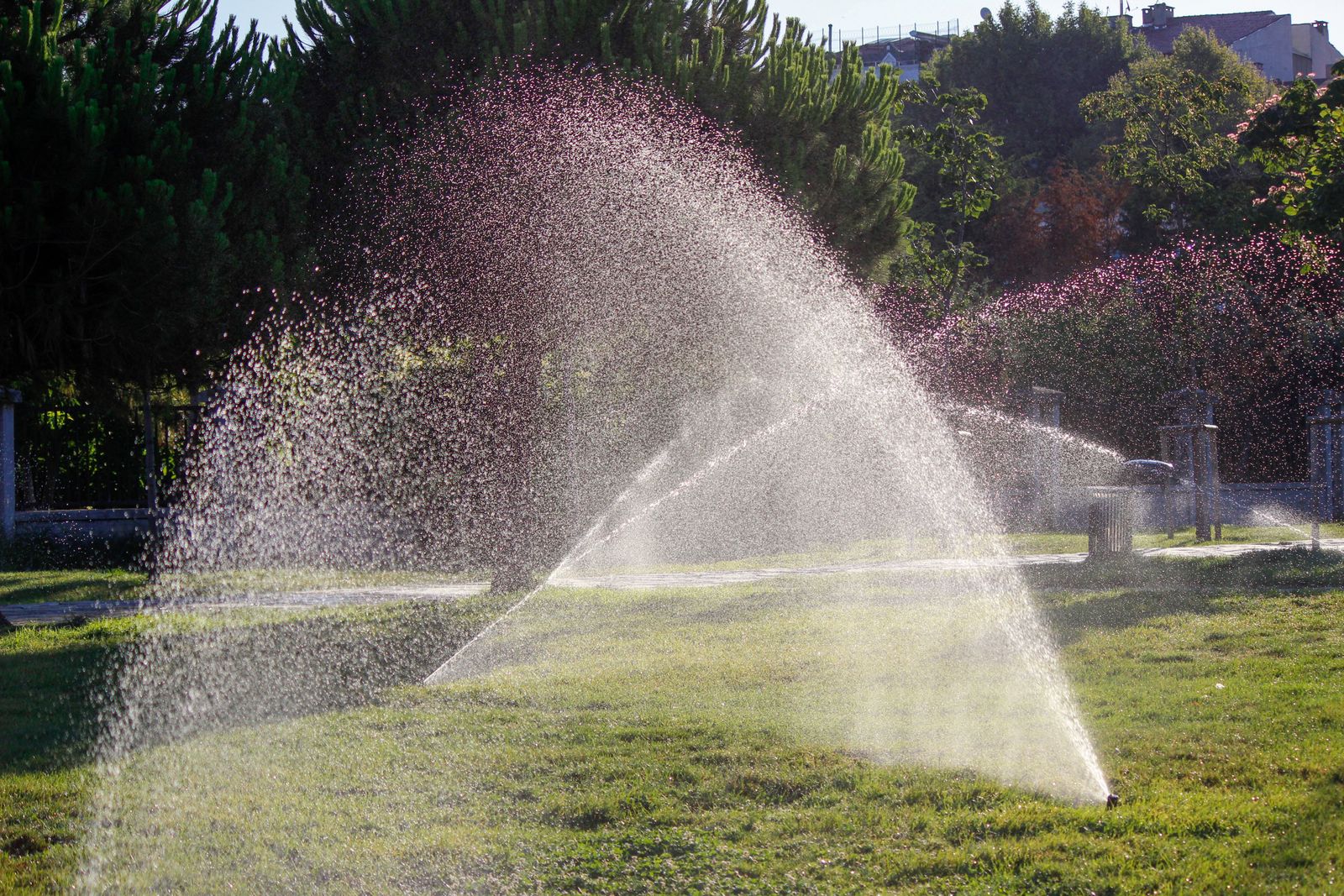
A lawn that goes brown in a dry spell is not always dead: many grasses go dormant to save water and recover when the rain returns. If you do water, the way you do it matters more than how often.
Water deeply, not daily
Short daily sprinkles keep the roots near the surface, where the soil dries out fastest. A deeper watering once or twice a week encourages roots to grow down, so the lawn copes better with heat. As a rough guide, many lawns need about 1 inch (2.5 cm) of water a week, including rain. Local conditions vary, so check any watering rules in your area.
Water early in the morning
- Early morning is cooler and calmer, so less water is lost to evaporation and wind.
- Watering in the evening leaves the grass wet overnight, which can encourage lawn diseases.
- Avoid the middle of the day, when much of the water evaporates before it reaches the roots.
Check how much you are giving
Place a few empty tuna cans or straight-sided containers on the lawn while the sprinkler runs and time how long it takes to fill them to about half an inch. Then you know how long to run that sprinkler each time.
Help the lawn hold on
- Raise the mower height in summer: longer grass shades the soil and keeps it cooler.
- Leave short clippings on the lawn to return moisture and nutrients.
- Keep off the grass as much as you can when it is dry and stressed.
Irrigation systems
If you have a sprinkler system, check the heads at the start of summer: look for broken, blocked or tilted heads and sprays that water the path instead of the lawn. A rain sensor or smart controller can skip watering after rain.